Saturday, April 25, 2015

World Malaria Day 2015: A Call to close the gaps in prevention and treatment to defeat Malaria

Today, the 25th day of April marks the global campaign for the total eradication of malaria in various endemic regions. Milestones have been achieved since the fight against malaria started decades ago but yet people still die from malaria daily with a higher mortality rate of children less than 5 years old and pregnant women.
 This year's theme focuses on a call to all (government, private institutions, civil authorities, non-governmental organisations and individuals to close the gaps in the prevention and treatment of malaria by providing more preventive measures and diagnostic testing for the treatment of malaria
This week the World Health Organisation (WHO) launched the updated guidelines for the treatment of malaria with focus on access to recommended treatment. The recommendation is to use artemisinin-based combination therapies (ACTs) although the challenge of access to health care still remains in some malaria zones. 
In Nigeria, most individuals are now used to self medication when they have or think they have symptoms of malaria. The danger there is that their immune system becomes resistant to malaria drugs since they mostly take "off the counter" drugs instead of prescribed drugs from a specialist. Therefore when they actually get infected with malaria and they are hospitalised, the prescription drugs do not make them well. There is a call to all to always "think malaria" when there are potential symptoms so that a proper diagnostic test is taken to confirm malaria before treatment.
We have a collective goal to support the "roll back malaria" program. We can defeat malaria if we all work in our communities to ensure preventive measures are applied and treatment is given when required. A lot of progress have been made but there is more to be done, let us all work together to achieve this.
Join the campaign for the total eradication of malaria in Nigeria. Remember the A- awareness B- bite prevention C chemoprophylaxis (for non-immune or Expatriates) and D- diagnosis. 

Saturday, April 11, 2015

Election Advisory (Safety & Security)

The Presidential and National Assembly elections have come and gone and thankfully it was relatively safe and violence-free. The period preceding 28th March was filled with tepid so you can imagine the relief when the results were announced and the incumbent President of the Federal Republic of Nigeria conceded to the defeat by the opposing party candidate.
This previous experience has made most people complacent and therefore the tendency to relax and take things for granted is very high. Elections in Nigeria have a history of tension, violent activities and/ or reactions prior to, during and after the exercise.
The following preventive measures is recommended to be applied as Nigerians vote today, April 11th in the Governorship and State Houses of Assembly elections to ensure their safety and security:
  • Avoid open display of your partisanship, use of political stickers on your vehicle or walls of your residence and branded clothing.
  •  Avoid public gathering and keep your voting preference confidential. There are opposing views everywhere and your celebration may trigger their sadness. Be very careful. 
  •  Be security conscious as touts and criminals may use this period to rob and kidnap people.
  •  Avoid as much as possible travel to potential flash-points during post-election periods.
  •  Avoid taking routes through offices of main political parties belonging to the contending parties, and key poll-related institutions, such as INEC premises.
  •  Know that post-election celebration is likely to cause an increase in road traffic incidents and accident, avoid following motorcades and celebration convoys
  • Keep abreast of information of planned activities (rallies, gatherings, etc.) billed to take place in and around your area via radio, Television news, Corporate Organisations' security text messages and local and social media with a view to avoiding the area where possible.
  • After casting your votes, leave polling centres immediately. Always inform trusted family contact of any movement out of your home.
  •  In the case of civil unrests, keep yourself and your family indoors at all times and keep your homes locked down. Ensure that all windows and doors are secured.
  • Reduce road travel during this period as much as practicable by stocking your home with basic supplies of food, cooking materials, water, and cash sufficient for extended period of restriction, first aid, adequate airtime on your phones, power generation and basic medication.
  • Put together a ‘Grab-n-go’ bag. This is a backpack that is filled with essential material to help in the event of need to move if area becomes unsafe.


Ultimately remain safe during the period; your life is more valuable than the results of the election.

Friday, February 27, 2015

Nature Speaks !!!

    Nature Speaks.............

What is in your immediate environment? Do you know the impact of your activities on the surrounding where you live?
As we exist in life we will generate waste it is unavoidable but the most important thing is how do you manage your waste stream and how is it disposed? It is very possible to minimise the waste generated by every family or community by adopting sustainable lifestyles. This can be achieved by complying with the 3Rs principle - reduce the amount of waste generated in your daily activities, reuse the products of your waste by putting it to other uses until the life cycle is exhausted and finally by recycling the waste. These measures can be achieved in different ways ranging from simple methods to technological advancement. The main goal is to ensure that nothing goes to the bin until it cannot be used for as a resource. This will make us cost effective by ensuring all our purchases achieve the purpose for which they are bought and more and also the environment is now impacted negatively by the product of our waste.
The above video is taken for a luxurious site in Victoria Island in Lagos in an affluent area of Lagos Island. It was shocking to see that people that live a comfortable life in an area where the rent or cost of a house is very expensive care little or less about what is in there immediate environment. The water and the land are polluted by waste generated from the community but none has taken the responsibility to take action and clean it up. Take a look at your surrounding environment, it is your responsibility not the government alone. Be sustainable, take up the challenge and make a positive impact wherever you find yourself. Do not leave the job for your landlord, the local authority or the state environmental agency. Challenge your self and make a change to ensure we protect and conserve our home..... the environment.

Saturday, January 31, 2015

Developing Personal Goals for 2015…………………………are they sustainable?

The New Year marks a year of hope and new beginning for a lot of people. It provides an opportunity for a fresh start. It also comes with a lot of plans filled with uncertainty. This is always challenging when things don’t go the way as planned. This is the time when people start by setting goals and making New Year resolutions. The big question is, today marks the last day of the first month of the year (January). Have you set your goals for the year? If you start the New Year with procrastinations, just getting on in life without a vision, how do we make achievements determined by timelines? What is the driver to make us earn that amount we need to meet our basic needs? It can be referred to as having “dreams with a timeline”. We constantly need to challenge ourselves in order to achieve what we have set out to do. One of the ways we can we accomplish that is to set sustainable goals.
The tips below will help you to set sustainable goals for 2015 to ensure your environmental performance as an individual is improved and your carbon footprint is reduced to ensure you can adopt a sustainable lifestyle. Your goals should be periodically reviewed to ensure they remain sustainable through the year and they are achieved to a considerable level of accomplishment.
v  Publicly stating what you set out to achieve- write it down and share with family and friends so they can remind you and keep you aligned
v  Set goals that provide observable and measurable results- that which can simple answer of yes or no when the question” has the goal been achieved?” is asked
v  Do not try to tick they box or make it a checklist- make it intentions with a target, it is all about continuous improvement
v  Your goals should be able to steer you in the right direction- specific to what you set out to achieve so all activities should be steered in the right direction towards achieving the set goal.
v  Your personal goals should be aligned with close family and friends- having a common vision helps to ensure all are committed and focused on the specific objectives of the goal
v  Reach for goals that will be motivating and inspiring-it should not be just more issues that need to be managed but should have a meaningful impact.
v  Sustainability goals must be integral to all aspect of your life - these goals will help enhance the way you conduct your activities
v  Always make sure the targets are realistic not bogus- there is a need to strike a balance between what can be practically achieved and at the same time setting a benchmark at a level where real improvements will ensue.
v  Setting sustainable goals should not be an expression of hope and desire – do not include goals without there being a clear roadmap as to how they can be achieved in reality.
v  Finally your goals must be innovative – think of ways to solve key environmental or social sustainability issues; this should be factored into the thinking when developing the goals.

Setting goals can be a herculean task and even making them sustainable can be worse but then at the end of the year, it leaves you fulfilled knowing that you have made a positive impact on your environment that is reflected globally. Take that step today and set your sustainable goals, it is not too late……………..pick your pen ………..write that first line.

Saturday, November 1, 2014

The Aftermath of Ebola in Nigeria

On the 20th of October, Nigeria was given the clean bill of being "Ebola free" by the World Health organisation. This good news came after a gruelling three months for a nation since the inception of the virus that dates back to 1976 when the first incident was recorded in Zaire. It had a lot of negative impact for Nigeria which includes the record of about nineteen (19) cases and seven (7) deaths mostly of health care workers but on the other hand, it had a lot of positive impact for us as a country. It gave the government a challenge to improve on the health care services, created awareness on personal hygiene for all citizens (hand-washing, use of sanitisers, proper disinfection e.t.c.), private organisations took up the challenge to improve on their welfare for their staff and the to the general public (provision of hand sanitisers, washing facilities, temperature scanning), non- governmental organisations and civil agencies created awareness in the local community, health care workers were trained to ensure they have adequate knowledge and skills to combat outbreak. In all these, it was a victory for Nigeria as a community and lots of other nations had one thing or the other to learn from our experience. This challenge brought out the best in us and was an indicator that when everyone collectively work towards a set goal, it can be easily achieved. Let us all continue to work together to make Nigeria a better and more sustainable country to live and dwell in.
Guardian Publication : Nigeria is now Ebola free.

Tuesday, April 22, 2014

Climate Reality Project launched in Africa………….the most vulnerable continent to climate change impacts


24thThe 24th international Climate Reality Project training by Al Gore took place in Johannesburg on 12th-14th March, 2014. It was the first time the Climate Reality training was conducted in Africa therefore a milestone achievement. This brought over 700 passionate individuals together from over 53 countries together in the beautiful city of Sandton, South Africa. The Mayor, Honorable Mohp Parks Tau who highlighted the effects of Climate Change in Johannesburg in the last decade opened the event. He discussed the adaptation initiatives that have been undertaken by the government and also plans in the future to reduce the effects of this dilemma.

Nigeria Delegates
Mentors with Al Gore
The art of storytelling as a effective tool was emphasized by Actress and Playwright Danai Guriri because personal stories help to connect with people when trying to win the climate change conversation. Other speakers includes Kumi Naidoo, Executive Director of Green Peace International; Wanjira Mathai, Director of Wangari Manthai Institute for Peace and Environmental Studies, Evans Wadougo, Patrick Ngowi, a social entrepreneur and CEO of Helvetic Group to mention a few.
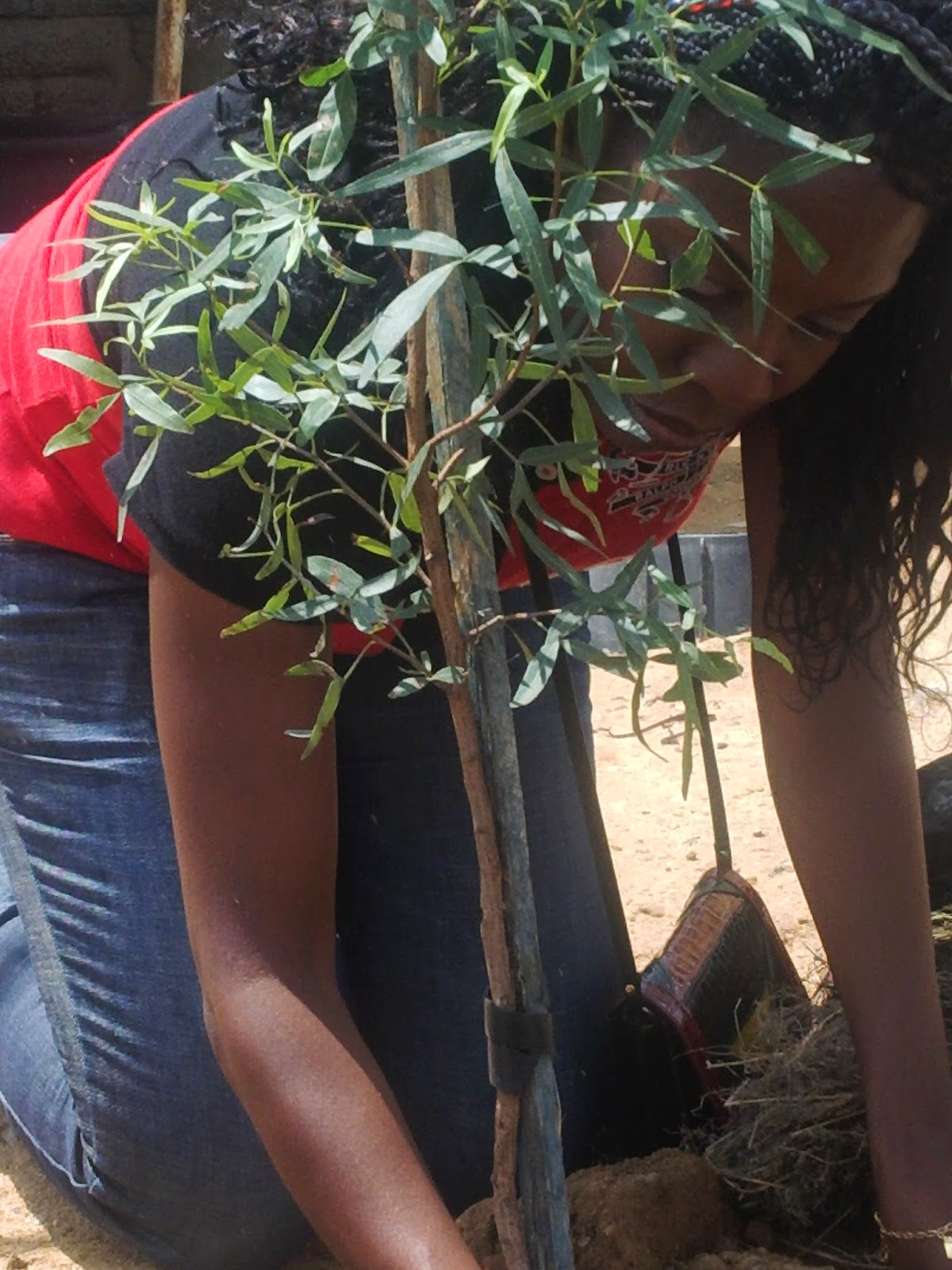
Less than 24 hours after the training, most of the new Climate leaders were left energetic and joined a day of action for the tree planting campaign organized by the Climate Reality Partner and leader for the African branch; Food and trees for Africa led by Jeunesse Park. 
Tree planting campaign at Alexandra

The pictures give more insight into the activities that took place in South Africa to
kick-off the action for the social revolution in Africa.


More information on the Climate reality Corps can be found http://climaterealityproject.
                                      
Written by O’ Reese on behalf of En-pact Solutions Limited. 2014.
Twitter: @O Reese2
         @EnpactHSE


Sunday, April 13, 2014

World Health Day 2014: Small Bite Big threat!


24tThe World Health Organization celebrates the World Health Day globally on 7th April annually to marl the anniversary of its origin and founding in 1948. The theme for this year is “Small Bite, Big threat:  preventing vector borne diseases" to highlight an area of priority. This year the World Health Organization committed to creating awareness for travelers by use of promotional material such as posters and boarding pass cards at London Heathrow airport ad Washington DC ‘s Dulles’ airports where travelers were advised on how to protect themselves from vectors borne diseases while away from home. At Geneva, the headquarters and other offices around the world, various campaigns took place to educate the general public on  the threat of vector diseases.
What are vectors? They are small organisms that serve as a medium for spreading diseases from person to person or place to place. They may be a threat to your health and that of your family at home and when traveling. Such vectors include mosquitoes, flies, ticks, freshwater snails, sandflies, rodents; insect vectors, lymphatic filariasis, chagas and bugs can cause serious illness, which may lead to death. These vectors transmit a wide range of parasites and pathogens that attack humans and animals. Diseases such as malaria, dengue fever, leishmaniasis, yellow fever, Ebola fever (currently endemic in Africa) to mention a few are preventable and they have a greater impact on the poorer and low income earners of the society.
About 50% of the general population is at risk of these diseases for people are more vulnerable due to travel, trade, migration, environmental changes such as climate change and industrialization, low immune system and various other factors. This year’s theme aims to promote and create awareness by focusing on the vectors that spread the disease, the disease they cause and simple precautions we can take to prevent the bite from these vectors.
   

Tips for preventing vector borne diseases
The following are tips to be considered to prevent borne diseases:
Ø  Get vaccinated against diseases such as yellow fever and Japanese encephalitis.
Ø  Educate
Ø  Clean your surroundings; ensure gutters are clean and free from all solids, get rid of all stagnant water that can be a breeding area for vectors
Ø  Ensure you wear light colored long sleeves and trousers especially between dusk to dawn
Ø  Use insect repellent as appropriate for mosquito prevention it should have at least 25% DEET content
Ø  Use insect treated nets over beds for all family members to sleep
Ø  Ensure the windows and doors of houses have net screens to prevent insects and other vectors from accessing your homes
Ø  Prior to traveling, contact your health care provider, find out about the vectors in the country and take steps to prevent vector bites
Ø  Frequent travelers should protect themselves when traveling to countries which pose health threat
Ø  Government should put measures in place to improve the protection of the population
Ø  Families living in vulnerable or vector prone areas should apply protective and preventive measures.
Ø  Practice vector control and provision of safe water.

Diseases caused by vectors are preventable therefore bite prevention is the key. 
Let us all join the global campaign with the World Health Organization to create 
awareness, provide education for those who are less informed and promote this campaign. 
The threat caused by a small bite can have devastating impact on a larger community. 
The tips above can be applied to prevent bites, spread the word.
                                         
Written by O’ Reese on behalf of En-pact Solutions Limited. 2014.
Twitter: @O Reese2
         @EnpactHSE